{{myquote|A parent will always think like a parent, long after their children are no longer kids.}}

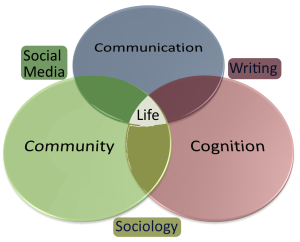
communication. community. cognition.
{{myquote|A parent will always think like a parent, long after their children are no longer kids.}}

It’s Friday, and we’ve got a little storm kicking and struggling for air down in the Gulf of Mexico.

It probably won’t amount to much, but it is enough to prompt this message:
Audio clip: Adobe Flash Player (version 9 or above) is required to play this audio clip. Download the latest version here. You also need to have JavaScript enabled in your browser.
[tags]Ike Pigott, Occam’s RazR, Office Space, humor[/tags]
Podcast: Play in new window | Download

“All of us get lost in the darkness, dreamers learn to steer by the stars.”
- Rush, “The Pass,” Presto (1989)
There’s a reason why sailors used the stars as their guide. Because of the immense distances between stars, they have no apparent “parallax” for earth-bound observers. Parallax is the measure of perspective change, and is best demonstrated by looking at the same object twice with a different eye closed.

For an object far enough away, the differences in the left eye and the right eye cancel. In fact, for the purposes of interstellar distances, you could have one “eye” on one side of the Earth and the other “eye” across the planet, and not get an appreciable difference. There are plans to put two telescopes into Earth’s solar orbit, on opposite sides. (Putting the two lenses 186 million miles apart would provide some true binocular perspective to some of the universe. But this isn’t an astrophysics discussion…)
Instead, I want you to think like a sailor. Steer by the things that are the most fixed and least changing. Steering by the stars kept the navigators from going off-course, where supplies of food or fresh water might not be at hand. Steering by the stars used to be a matter of survival.
I’ve had a habit over the last 12 years that I am proud of. Every year, I re-examine my 5, 10, and 15-year plans. Yes, they are different. I look at where I want to be in my life 15 years down the road, and that helps me set 5 and 10-year milestones that guide me in my decisions. Many times, I’ve altered those plans – I didn’t have a path to take me to my current job. It was an opportunity that fell well within the boundaries of my 15-year plan.
By steering by the stars, I found a different path – one that is more fulfilling then the one I originally charted. And by focusing only on the really important core values in the 15-year plan, I don’t get caught seeking the superficial.
Where do you want to be in 15 years? In five? Wouldn’t you like to know?
[tags]Ike Pigott, Occam’s RazR, planning, productivity, optics, Rush[/tags]

 I was driving my 5-year-old to kindergarten yesterday morning, and had just cranked the car when she asked the question:
“Daddy, why do we have to go to school?”
It’s an innocent enough question, but I’ve been down the Rabbit Hole with her questions in the past, and I knew there were three major pitfalls I needed to avoid:
Instead of pausing a moment, I said “You go to school to learn things.”
“Why do I need to go there? Why can’t I learn at home?”
Well, she had me there. Time to avoid circles and holes in the reasoning. [Read more...]
{{myquote|There’s no ‘I’ in ‘team,’ but there is an ‘I’ and a ‘Me’ in ‘Social Media’.}}
 “We can blog if we want to,
we can leave your friends behind…”
Markets are Conversations. We’ve heard it so often, we take it for granted. And it may well yet stand the test of time as a metaphor that defines our future. But there is another powerful idea in the offing: You are your brand.
In essence, the second is just a logical postulate of the first. If a “market” is really a “conversation,” then there must be real people (with real faces and real voices) taking part. I’m okay with that so far.
“’cause your friends don’t blog and if they don’t blog
Well they’re no friends of mine”
To be a part of the conversation, you have to have a voice. “Blogs” used to be the atom of online conversation, and commenting was the proof. In fact, to this day I still have many coworkers and others that I respect who continue to be hung up on the definition of a “blog” including commenting. “If it doesn’t have comments, it’s just a website.” Never mind that many of the pioneers of modern online communications don’t allow comments. (Seth?)
“I say, we can write what we want to
A place where they will never find
And we can act like we come from out of this world
Leave the real one far behind”
If the Conversation is now the essential element, then those who are duplicitous in their conversations are going to freeze themselves out of the Marketplace. How can you trust someone who says one thing here and another thing there? Unlike the world of the fractured song-lyric above, there is “no place where they will never find.” Hello, John Mackey?
“Say, we can act if want to
If we don’t nobody will
And you can act real rude and totally removed
And I can act like an imbecile”
Yes, you can act like an imbecile or even worse. But remember, you are participating in a Conversation, and as such, you have a face. Or at the very least, a facade. With the interlinking and intermingling of social networks, it is even permissible to be a little more sarcastic on one than on another, as we expect each to bring out a different aspect of our personalities. At the end of the day, though – you still need to be accountable for what you say. The script is flipped, and you don’t just own what you write. What you write can own you.
“We can write if we want to
We’ve got all your posts and mine
As long as we abuse it, never gonna lose it
Everything’ll work out right”
…and that’s where the song fades out. It won’t work out right.
Some within the Blogoverse now see Jonah Bloom – the Executive Director of Ad Age – in competition with himself. Jonah wrote a blog posting under the Ad Age banner quite critical of Joseph Jaffe, whose already catching enough grief watching his crayon melt. This isn’t so much a problem for Bloom as it is for Ad Age. All of the tenets of Social Media and New Marketing lead back to the individual owning up to his/her words – yet there remains the expectation that “the corporation” has a “corporate identity” and a “corporate voice”, and the law even recognizes “the corporation” as a legal entity, just like an individual.
I know of what I speak first-hand. I used to blog in a more critical way about how other people, agencies, and businesses handled their crisis communications statements. Now that my name is more closely aligned with my present employer, I chose to pick a different direction so as to avoid confusion. I wasn’t asked to do so – not once. But I did it, because I understand human nature.
Human nature sees people with faces, and doesn’t get fooled so much by what’s on top of our heads. In the world we’re just now entering, there’s so much more riding on our personal reputation because it is all so eminently searchable. If the Market is truly a Conversation, then we’re still doing business one-to-one.
And even if there is no direct eye-contact, rest assured that we’re not paying as much attention to “which hat” you were wearing when you started dropping e-bombs on someone else. In the next frontier of marketing – we are all Men Without Hats.

 Every company needs a geek to come up with great ideas. Someone who knows enough about the business to internalize the challenges, and is just disconnected enough from ‘business-as-usual’ to see the potential in something new.
“Our competitors aren’t doing it, so why should we?”
Here’s an example of an idea that would be quite cheap to implement, yet would reap big dividends for an airline. (Let’s see who is listening out there.) Imagine your feeling if you were to receive the following e-mail or text message:
Dear Mr. Pigott:
Please accept our apologies for the lack of complimentary service during your recent flight from Washington to Charlotte. We’re sorry for any inconvenience that might have caused you.
We aren’t asking for you to excuse us, but rather understand what happened. As you might recall, the start of the flight was delayed by about 15 minutes by planes ahead of us in the runway queue. With a plane full of people making connecting flights headed home on a Friday night, we elected to fly a good bit faster than our typical cruising speed to make up the time, and beat the incoming inclement weather. Certainly, making several people miss connections would have had far worse impact on the overall customer experience.
Regardless, we’d like you to accept a beverage upgrade on your next trip with us. Just be sure to swipe your Dividend Miles Card through the check-in kiosk, and it will print a coupon for you. We’re sorry you were inconvenienced, and our crew was quick to alert us of all passengers in your situation – you all got this same message.
Thanks for understanding, and we want your business in the future.
Sincerely,
Ima Piecafiction
USAir Customer Conversations Staff
We’re not talking about anything that would require immense cost to implement. A simple reporting system, even done through e-mail on a Blackberry, could prompt instant customer-service communications. Airline attendants would know which rows were missed, and unless you are on Southwest, they’d reasonably know who was in the seats to be credited.
How much cheaper would it be in the long run to send that message proactively, rather than waiting to see who complained. Imagine how cool it would be to get that in your email before picking up your luggage!
Technology has given us some amazing tools that we are not even close to exploiting. Part of the digital revolution is the realization you can reach directly to clients and customers with less expense and initial investment. The firms that innovate in this regard are the ones who will get the first shot at brand loyalty with an incoming generation of decision-makers who aren’t just tech-savvy but tech-dependent. The horizon is wide-open for companies to find new ways to put their customers first – they just need to listen to their inner geek, or hire one onto the staff.
(psst – US Air, if you are listening, I really did need that drink. I understand why you skipped me, but you didn’t even try to explain it to me.)
[tags]Ike Pigott, Occam’s RazR, marketing, customer evangelism, customer relations, airlines, airline satisfaction, technology, marketing, US Air[/tags]